Solutions

Remote Weapon Stations

FDI Technology develops integrated remote weapon station (RCWS) architectures combining electro-optical observation, target tracking, fire-control functions, stabilized weapon-platform control and operator interfaces for compatible fixed and mobile platforms.

FALCON-127 SFCS remote weapon station with an integrated electro-optical unit on a wheeled armoured vehicle.

FALCON-127 SFCS RCWS

Remote weapon station integration on a compatible vehicle platform.

At a glance

What is FDI Technology’s Remote Weapon Station solution?

FDI Technology’s Remote Weapon Station solution integrates electro-optical observation, target detection and tracking, fire-control functions, stabilized weapon-platform control and operator interfaces within a coordinated system architecture.

The architecture is designed to support platform-specific integration requirements for compatible vehicle-mounted, fixed and other remotely operated weapon configurations.

FALCON-127 SFCS RCWS and FALCON-127 DFCS RCWS demonstrate FDI Technology’s remote weapon station integration approach, while FALCON EYE provides electro-optical tracking and fire-control capabilities in relevant system configurations.

Integrated Remote Weapon Station Architecture

A remote weapon station combines observation and weapon-platform functions under remote operator control. Its operational role depends on the coordination of electro-optical sensors, target information, tracking, fire-control support, stabilization and the operator interface. Available platform-state information and applicable command-and-control interfaces form part of the integration context. These elements need to work within the requirements of the host platform and the intended mission.

FDI Technology treats RCWS development as a system-integration task. The station, its sensors, the compatible weapon platform and the operator’s controls are considered together. This approach defines the relationship between observation, target assessment and operator-controlled engagement, rather than treating remote movement alone as a complete station capability. The resulting configuration is shaped by the platform and its integration requirements.

Sensor-to-Operator Workflow

The following sequence presents the main functional relationships within a remote weapon station. It describes the public system architecture at a high level; individual elements depend on the compatible platform and configuration.

  1. Observation

    Electro-optical inputs provide visual observation and support operator situational awareness.

  2. Target Detection

    Targets are identified for assessment, with AI-assisted detection where supported by the configuration.

  3. Target Tracking

    Tracking information supports continued observation and assessment of the selected target.

  4. Fire-Control Support

    Available target, range and system information supports the operator through the fire-control architecture.

  5. Stabilized Platform Control

    The architecture coordinates the compatible stabilized platform with observation, tracking and operator controls.

  6. Weapon Platform Interface

    Compatible weapon-platform interfaces connect the remote station to the configured system architecture.

  7. Operator-Controlled Engagement

    The operator remains responsible for target assessment and engagement control.

Observation, tracking and fire-control support remain connected to operator engagement authority.

Electro-Optical Observation & Target Tracking

Electro-optical observation gives the operator a visual basis for understanding the station’s surroundings and assessing a selected target. Target acquisition support and tracking connect this view with the information used by the fire-control system. The sensor configuration and the way information is presented are therefore considered alongside station control and platform requirements.

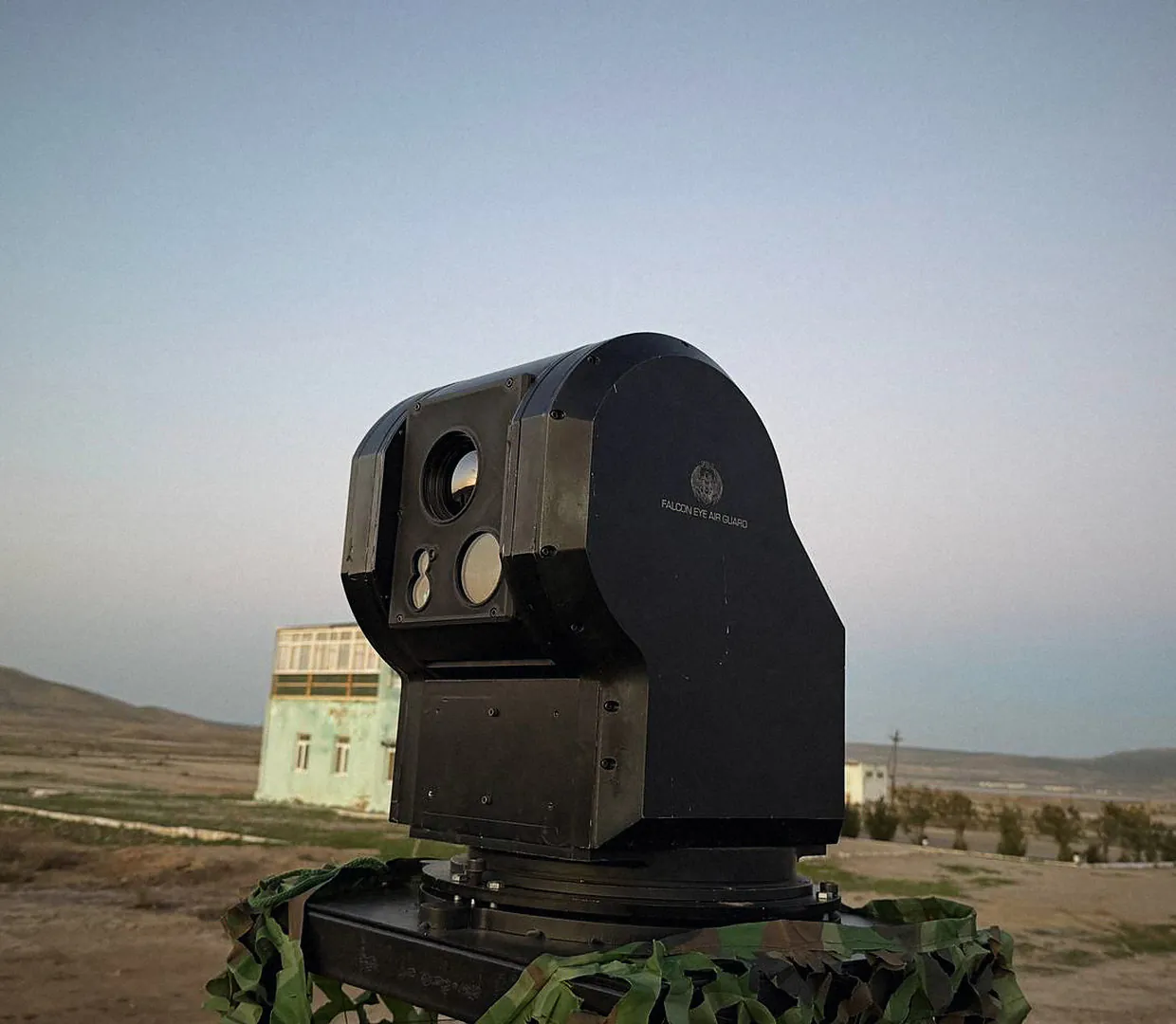
FALCON EYE provides an integrated electro-optical tracking and fire-control capability in relevant FDI configurations, including ballistic-computation functions. Its role extends beyond the visible sensor assembly: it connects observation and tracking with the wider fire-control architecture used by compatible weapon platforms.

Stabilization & Mobile Platform Integration

A vehicle-mounted station operates within a changing platform environment. Stabilized observation and weapon-platform operation must therefore be considered together with sensor orientation, tracking information, operator controls and the station’s interfaces. Stabilization is part of the integrated platform configuration, with the requirements defined around the host vehicle and intended application.

FDI Technology evaluates these relationships within the overall integration architecture. Vehicle-specific arrangements and the coordination of sensors with the weapon platform shape the configuration. This keeps mobile-platform integration focused on how the station’s functions work together, without assuming that every installation has the same operating conditions.

FALCON-127 DFCS remote weapon station and electro-optical units mounted on a tracked armoured vehicle.

FALCON-127 DFCS RCWS

A vehicle-mounted remote weapon station configuration.

Fire Control & Ballistic Support

Compatible remote weapon station configurations can bring target and range information, operator controls and available platform and environmental inputs into the fire-control process. Ballistic computation supports the generation of a fire-control solution for the configured weapon platform. These functions provide information and support for the operator’s target evaluation and engagement decision process.

FALCON EYE and the FALCON-127 fire-control configurations provide the relevant integration context for these capabilities. The station’s composition depends on its compatible weapon configuration, sensor inputs and platform requirements. Final engagement control remains with the operator.

AI-Assisted Target Functions

Where supported by the system configuration, AI-assisted target detection, classification and tracking can support situational awareness and the continued assessment of a target. These functions contribute to the information available to the operator alongside observation, tracking status and fire-control support.

Their role is to assist the operator within the configured station architecture. The operator remains responsible for target assessment and engagement control; assisted target functions do not replace that authority.

Operator-Centric Control

The operator interface coordinates more than station movement. Observation, target assessment, tracking status, fire-control information, system status and weapon-platform controls can be presented within a common mission context. Their relationship matters when defining the station’s control arrangement and the information available to the operator.

FDI Technology considers these requirements alongside the sensor and platform configuration. The operator retains a central role throughout target evaluation and controlled engagement, with observation and computational support serving that role.

Platform & Weapon Integration

Vehicle-mounted stations and fixed installations introduce different integration conditions. Platform geometry, available interfaces, power and system architecture, sensor and weapon configuration, stabilization requirements and operator arrangements all inform the integration scope. The command-and-control environment and mission profile are considered at the same system level.

The approach is modular and platform-specific. It can address compatible vehicle-mounted stations, fixed defensive positions, other remotely operated weapon platforms and modernization of existing installations. The selection of station elements follows the integration task rather than a single configuration being assumed for every platform.

Single & Dual Fire-Control Configurations

FALCON-127 SFCS RCWS represents the single fire-control configuration in the FDI portfolio. FALCON-127 DFCS RCWS provides a dual fire-control configuration, with separate commander and gunner control arrangements and independent electro-optical fire-control systems documented in the product record.

Both illustrate the relationship between station control, observation and compatible weapon-platform integration. The choice of configuration depends on the required operator arrangement and platform context. Product pages provide the information specific to each system.

Core Capabilities

  • Integrated remote weapon station architecture
  • Electro-optical observation
  • Target detection and tracking
  • Fire-control integration
  • Ballistic computation support
  • Stabilized platform control
  • Operator-centric control
  • Sensor and weapon integration
  • Platform-specific configuration
  • Vehicle and fixed-platform integration
  • Multi-system interface integration
  • Command-and-control compatibility
  • AI-assisted target functions
  • Platform modernization integration

Application Areas

Vehicle-Mounted Weapon Platforms
Remote weapon station integration adapted to compatible vehicle architectures and mission requirements.
Fixed Defensive Positions
Remote observation and weapon-control architectures configured for compatible fixed installations.
Platform Modernization
Observation, tracking, fire-control and operator-control functions integrated into compatible existing platforms.
Fire-Control Integration Programmes
Coordination of target information, fire-control functions, operator controls and compatible weapon-platform interfaces.
Sensor & Weapon Integration
System-level integration of electro-optical observation, tracking and compatible weapon systems.

Relevant Systems

These FDI systems illustrate remote weapon station configurations and their electro-optical and fire-control integration context.

FALCON-127 SFCS remote weapon station and electro-optical unit mounted on a wheeled armoured vehicle.

FALCON-127 SFCS RCWS

A single fire-control remote weapon station configuration combining FALCON EYE electro-optical observation and tracking, ballistic computation, operator control and compatible weapon-platform interfaces.

Explore ⁨FALCON-127 SFCS RCWS⁩
FALCON-127 DFCS remote weapon station with electro-optical units on a tracked armoured vehicle.

FALCON-127 DFCS RCWS

A dual fire-control remote weapon station configuration with separate commander and gunner controls and independent FALCON EYE electro-optical fire-control systems.

Explore ⁨FALCON-127 DFCS RCWS⁩
Electro-optical assembly of the FALCON EYE integrated tracking and fire-control system.

FALCON EYE

An integrated electro-optical tracking, fire-control and ballistic-computation system supporting compatible FDI weapon-platform configurations and AI-assisted target functions.

Explore ⁨FALCON EYE⁩

Discuss Your Remote Weapon Station Integration Requirements

Contact FDI Technology to discuss platform, sensor, fire-control, operator-control and compatible weapon-system integration requirements for your application.

Contact FDI Technology